Nail Paint Factory Custom Products For Beauty Brands
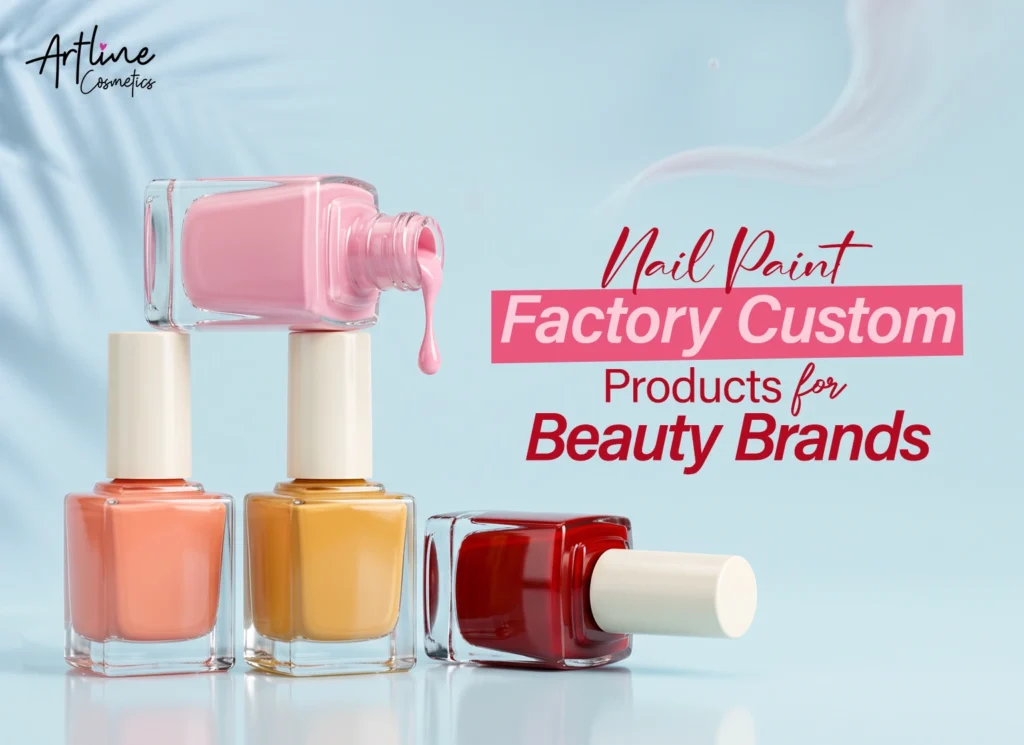
For beauty brands, nail paint is no longer limited to a basic range of everyday colors. Consumers now look for different finishes, textures, shades, packaging styles, and product experiences. This has made custom manufacturing an important option for businesses that want to build a distinctive nail-care collection without establishing their own production facility.
Choosing the right manufacturing partner can simplify everything from formulation and color development to packaging and final production. Artline Cosmetics provides private-label, contract manufacturing, custom formulation, and new product development services, with nail-care capabilities covering multiple finishes and custom product requirements.
Why Custom Nail Products Matter For Beauty Brands
A standard product may be suitable for a business that wants to enter the market quickly, but custom products give brands greater control over their identity.
A beauty company may want a signature nude collection, a seasonal range, glitter shades for festive campaigns, or a premium matte series. Custom manufacturing makes it possible to develop products around these specific concepts rather than relying entirely on off-the-shelf options.
The process can involve custom colors, finishes, formulations, bottle designs, brushes, labels, and outer packaging. This flexibility is particularly useful for brands trying to create a consistent visual identity across their product range.
What Does A Nail Polish Factory Actually Provide?
A professional nail polish factory can handle several stages of production under one manufacturing setup. Depending on the manufacturer and project, this can include formulation development, sampling, color matching, production, quality assurance, filling, packaging, labeling, and dispatch.
This integrated approach can save a brand from coordinating separate vendors for every stage. It can also make communication easier because formulation and packaging decisions can be managed within the same production process.
For example, Artline’s published manufacturing process includes formulation and sampling, production and quality assurance, followed by packaging and delivery.
Custom Formulation For Different Product Concepts
Formula selection should be based on the experience your brand wants to create. Different customers may prefer quick-drying products, high-shine finishes, matte textures, gel-like effects, glitter, or metallic appearances.
A capable manufacturer should be able to discuss the technical requirements associated with the desired product instead of simply offering a fixed catalog.
Artline’s manufacturing information lists high-shine, matte, quick-dry, long-lasting, breathable, and chip-resistant formulations among its nail polish capabilities.
Before approving a formula, brands should request samples and evaluate factors such as application, consistency, pigmentation, finish, drying behavior, and packaging compatibility.
Colour Development Can Build Brand Identity
Color is often one of the strongest differentiators in the nail category. A manufacturer with color-development capabilities can help brands move beyond standard shades.
A custom collection could include the following:
- Signature brand colours
- Seasonal shades
- Soft nude palettes
- Bright and bold colours
- Glitter and shimmer finishes
- Metallic shades
- Matte collections
- Gel-effect finishes
Artline states that its color specialists can match existing references and develop custom shades using its pigment and dye resources.
This type of support allows brands to create collections that are more closely connected to their target audience and positioning.
Packaging Is Part Of The Product
For cosmetics, packaging is not simply a protective layer. It contributes to shelf appeal, brand recognition, and the overall perception of the product.
When selecting a nail polish supplier, ask about available bottle shapes, brush styles, caps, labels, outer boxes, and other packaging options. Also clarify whether the manufacturer can help coordinate packaging with the formulation and filling process.
A cohesive package can be particularly important for online brands because customers often make their first impression from product photographs.
Quality Control Should Be Part Of Every Stage
A visually appealing product is not enough if different batches perform differently. Consistency is especially important for shades that customers may purchase repeatedly.
A reliable manufacturer should have quality checks throughout production. These can include checking raw materials, formulation characteristics, color consistency, filling, packaging, and finished products.
Artline states that its nail-care manufacturing process includes testing and quality-control procedures intended to maintain consistency and product performance.
Brands should ask what testing is performed and what documentation is available for their particular product before placing a large order.
Private Label And Contract Manufacturing
Private-label manufacturing allows a beauty brand to sell products under its own identity while outsourcing production. Contract manufacturing can provide similar production support, particularly when a business has specific requirements for formulation or product development.
The benefit is that brands can concentrate on areas such as branding, marketing, sales, and distribution while the manufacturing partner manages production.
For smaller businesses, this can also reduce the need to invest in manufacturing equipment, production premises, formulation resources, and specialist personnel.
How To Choose The Right Manufacturing Partner
Finding a nail polish supplier should involve more than comparing quotations. Consider the manufacturer’s experience, product range, formulation capabilities, quality systems, MOQ, packaging support, production capacity, and delivery timelines.
A useful checklist includes the following:
| Factor | What to Check |
| Formulation | Custom and ready-made options |
| Colour | Shade matching and development |
| Finishes | Matte, glitter, gel, metallic and gloss |
| Quality | Testing and batch controls |
| Packaging | Bottles, brushes, caps and labels |
| MOQ | Minimum quantity per product or shade |
| Capacity | Ability to handle future growth |
| Timeline | Sampling and production lead times |
| Compliance | Applicable manufacturing and labelling requirements |
Requesting samples before bulk production is also advisable. It allows your team to assess the actual product rather than making a decision based only on a catalog or presentation.
What If You Are Searching For A Nail Polish Factory Close To You?
Businesses often search for a nail polish factory near me because proximity can seem convenient. Location can matter for meetings, inspections, logistics, and communication, but it should not be the only selection criterion.
A manufacturer located farther away may still be a better fit if it offers stronger formulation expertise, better quality systems, suitable MOQs, broader customization, and reliable logistics.
Instead of focusing exclusively on distance, compare the manufacturer’s complete capabilities and determine whether its production process matches your business requirements.
Why Manufacturing Flexibility Helps Growing Brands
A beauty brand’s requirements can change considerably after launch. A small initial collection may eventually expand into seasonal colors, new finishes, larger production volumes, or additional nail-care products.
This makes scalability an important consideration when choosing a nail paint factory India. The manufacturer should ideally be able to support both initial production and increased volumes without compromising consistency.
Artline states that its infrastructure can accommodate production ranging from small pilot runs to larger-scale batches while maintaining its production and quality processes.
Sustainability And Product Expectations
Consumers are increasingly interested in how beauty products are formulated and manufactured. Brands may therefore want to explore options such as recyclable packaging, cruelty-free products, or other formulation requirements depending on their market and positioning.
However, brands should ask manufacturers for specific documentation supporting any sustainability, safety, or ethical claims they intend to make. This helps ensure that marketing statements accurately reflect the finished product and manufacturing process.
Summary
Custom nail products give beauty brands greater freedom to create collections that reflect their identity, audience, and market position. From shade development and specialized finishes to packaging and scalable production, the right manufacturing partner can support several stages of product development. When evaluating a Nail Paint Factory India, businesses should look beyond price and consider formulation expertise, quality control, customization, compliance, MOQ, and long-term production capacity.
Artline Cosmetics provides private-label and contract manufacturing services alongside custom formulations and nail-care product development, giving brands a practical route for turning product concepts into finished collections.
FAQs:
1. What types of nail products can beauty brands customize?
Brands can explore different colors, textures, finishes, formulas, packaging styles, and product concepts depending on the manufacturer’s capabilities.
2. Can a manufacturer develop a completely new nail polish formula?
Some manufacturers provide custom formulation and R&D services. The exact level of customization should be discussed during the product-development stage.
3. Is private-label manufacturing suitable for startups?
Yes. It can allow startups to launch products without investing in their own manufacturing infrastructure while still offering opportunities for branding and product customization.
4. What should I ask a nail polish manufacturer before placing an order?
Ask about formulation, samples, MOQ, quality testing, packaging, production capacity, lead times, regulatory documentation, and the process for handling quality concerns.
5. Should I choose a manufacturer based on location?
Location can be useful for logistics and communication, but it should not be the deciding factor. Manufacturing expertise, quality, customization, capacity, and reliability are equally important.